
BoneFoam Knee Buddy:
Main Takeaways from the Start.
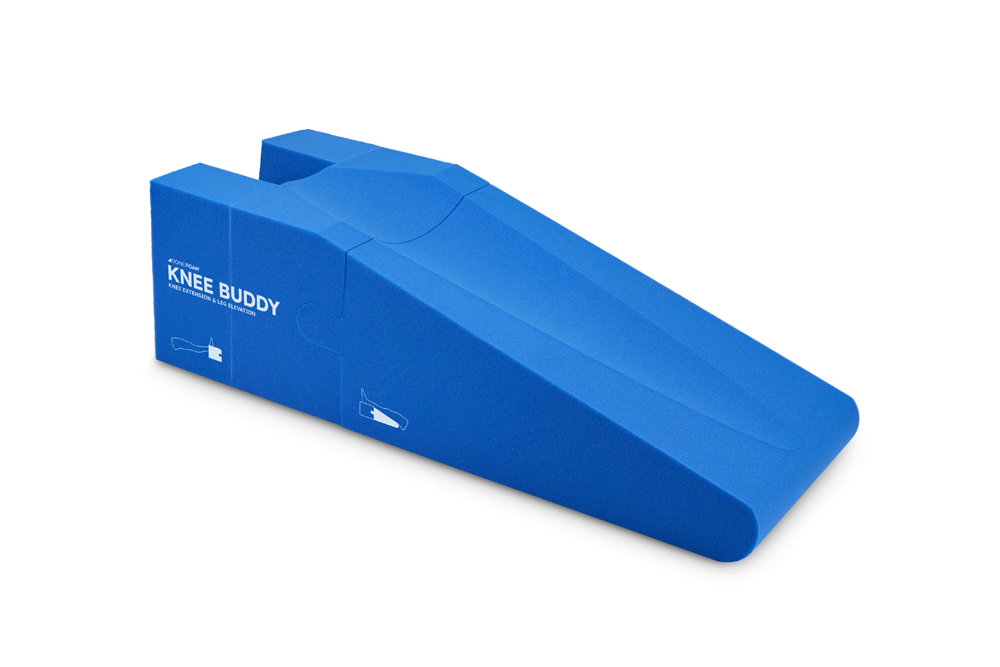
Elevation alone is insufficient if it compromises extension or alignment. A coordinated approach that takes everything into consideration from addressing elevation, extension, and alignment simultaneously, provides a more effective framework for managing swelling, restoring motion, and improving overall outcomes after surgery. That's why BoneFoam collaborated with ortho surgeons to design the BoneFoam Knee Buddy. The Knee Buddy's differentated two-piece design is made of premium quality, medical-grade foam. Nothing compares to the attention of details and quality behind BoneFoam rehab solutions. Learn more or buy now.
Optimizing Knee Positioning: Integrating Elevation and Extension in Post-op Recovery
The Knee Buddy was designed to solve a common but often over looked problem in knee recovery. In postoperative recovery, patients are instructed to elevate their leg, but not how to do so without compromising knee extension or alignment. While elevation is widely recommended to manage swelling, and terminal knee extension (otherwise known as TKE) is critical for restoring function, these elements are frequently addressed in isolation. By integrating elevation, extension, and alignment into a single positioning system, the Knee Buddy introduces a more complete and clinically aligned approach to the postoperative recovery process.
The Role of Elevation in Swelling Management
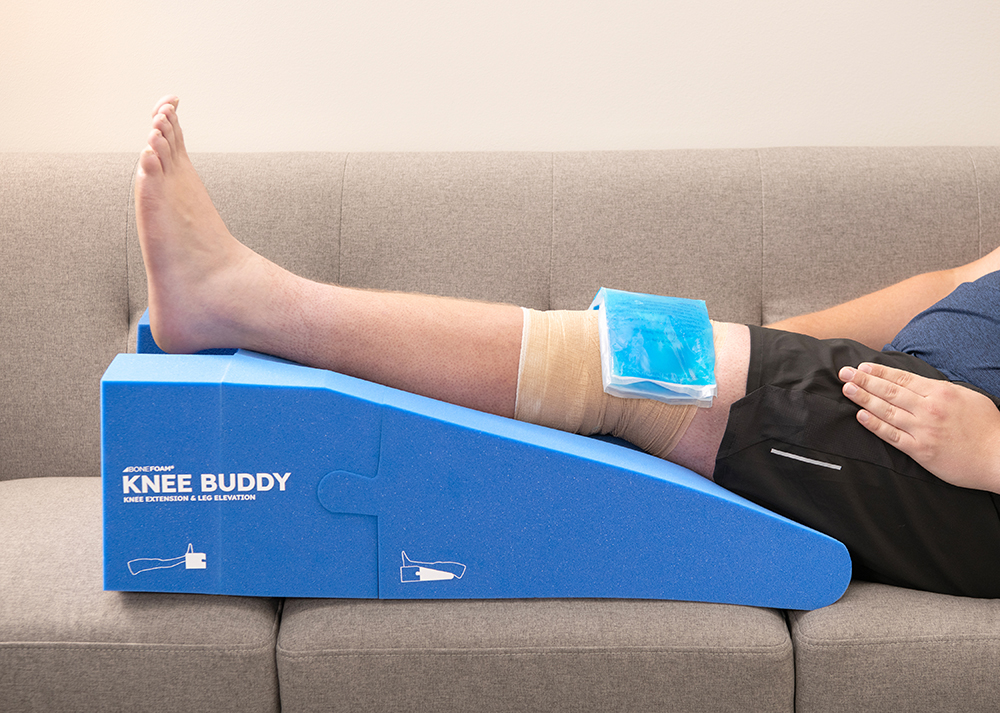
Postoperative swelling is a normal response after procedures such as knee replacement, ligament reconstruction, or fracture repair. Elevating the leg above the level of the heart helps improve circulation and moves excess fluid out of the area, which can reduce pain and enhance mobility1. However, recovery is influenced not just by elevating theleg, but by how the leg is positioned while it’s elevated. The quality and consistency of positioning play a critical role in how swelling is managed and how well the knee recovers. Learn more or buy now.
Limitations of Conventional Positioning
Common at home strategies, such as the usage of pillowsor towel rolls, introduce variability in both alignment and support. These methods frequently result in unintentional knee flexion, inconsistent elevation angles, and a loss of neutral lower-extremity alignment. This loss in each ofthose categories can alter pelvic mechanics and increase strain through the hips and lower back5. Rehabilitation research supports the use of gentle, sustained positioning over forceful, short duration techniques to restore range of motion (ROM) and reduce unwanted muscle guarding. This is particularly important during periods of rest or sleep. Inconsistent or unstable positioning may compromise the benefits of sustained and gentle positioning, contributing to persistent swelling and joint stiffness.
The Importance of Maintaining Terminal Knee Extension
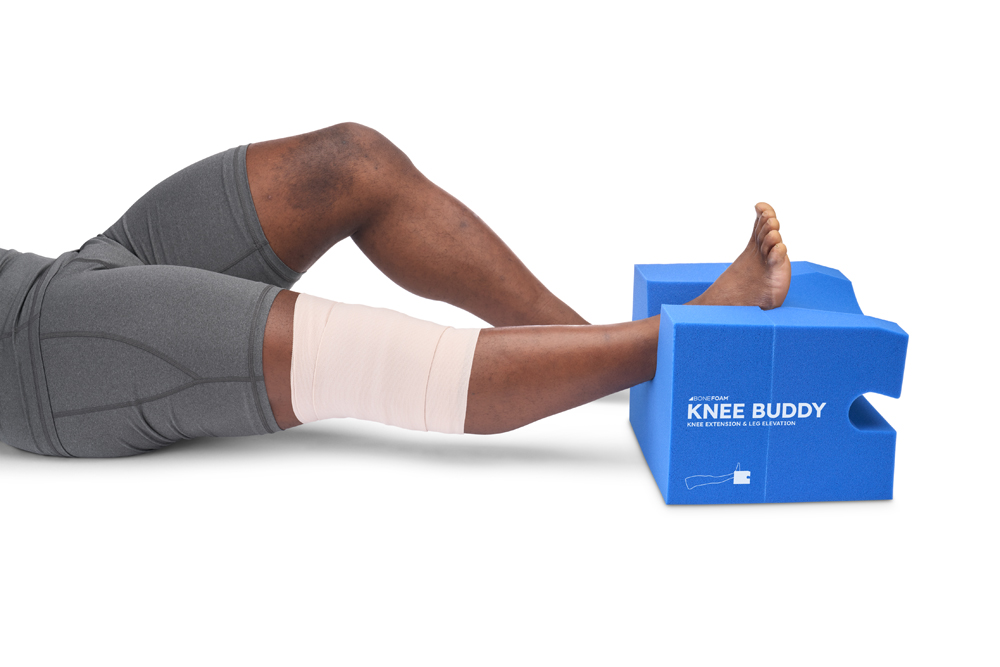
Restoring Terminal Knee Extension (TKE) remains a central objective in knee rehab. Deficits in extension are associated with altered gait mechanics, reduced quadriceps efficiency, and increased joint loading overtime. Sustained periods in slight flexion, common with improvised supports, may contribute to tightness and delayed recovery, reinforcing the importance of maintaining extension outside of therapy and home exercise sessions. Learn more or buy now.
Integrated Positioning: Elevation, Extension and Alignment
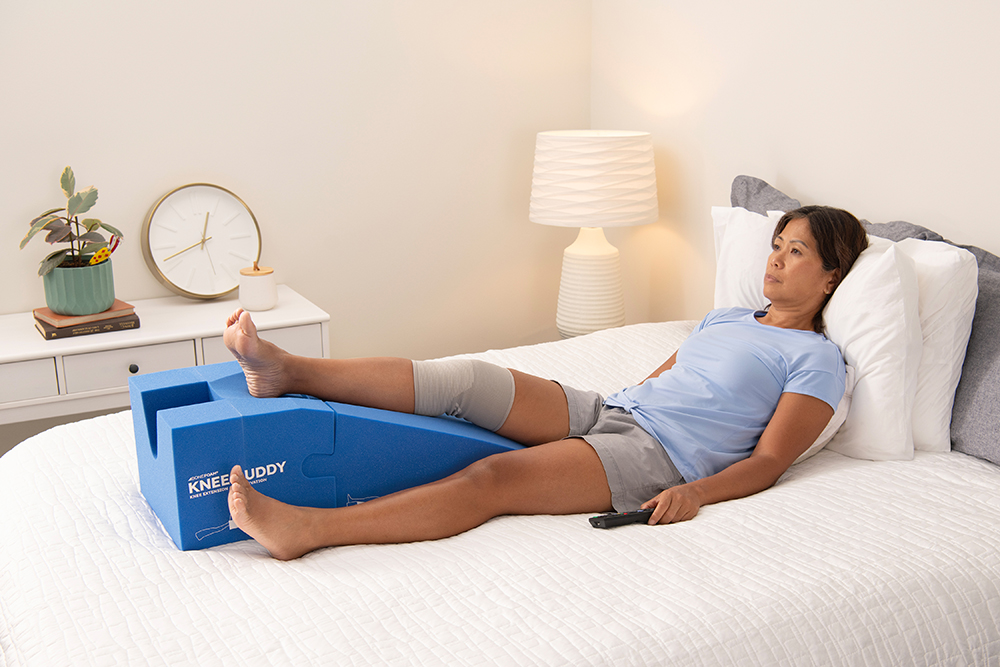
The Knee Buddy was designed to address these interdependent variables through a unified positioning system. It provides elevation above the heart to support edema reduction, consistent knee extensionpositioning to reinforce TKE, neutral foot and ankle alignment to limitexternal rotation and undesired compensatory mechanics, and a stable support surface to enable prolonged tolerable positioning. By supporting the entire lower extremity from the thighall the way to the foot, the Knee Buddy system reduces variability and promotes adherence to recommended positioning strategies during rest. Learn more or buy now.
Clinical Implications
Improved alignment, reduced guarding, and sustained elevation collectively contribute to:
1. Enhanced swelling control
2. Reduced pain perception34
3. Improved sleep quality and recovery capacity23
4. More efficient gain of range of motion
Verified Publication References:
1 Wylde V, et al. Orthop Traumatol Surg Res. 2011.
2 Gibian JT, et al. J Arthroplasty. 2023.
3 Finan PH, et al. J Pain. 2013.
4 Schrimpf M, et al. Sleep Med Rev. 2015.
5 McClelland JA, et al. Gait Posture. 2011.