Rethinking the basics: A new standard for patient positioning in ACDF surgery
Significant innovations and advances in anterior cervical discectomy and fusion (ACDF) surgery include minimally invasive techniques, AI-assisted customization, robotic assistance and 3D-printed and custom implants. However, despite these advances, patient positioning during surgery is an important aspect of ACDFs that has been overlooked and has lacked innovation. Surgeons and surgical teams continue to position patients with exactly the same makeshift methods they did decades ago.
With surgeons in the U.S. performing 132,000 ACDF surgeries each year, and with an increasing percentage of ACDFs and other spine surgeries being performed at ASCs as a lower-cost site of care, there is increased focus on improving the safety and efficiency of these procedures, which is shining a spotlight on patient positioning.
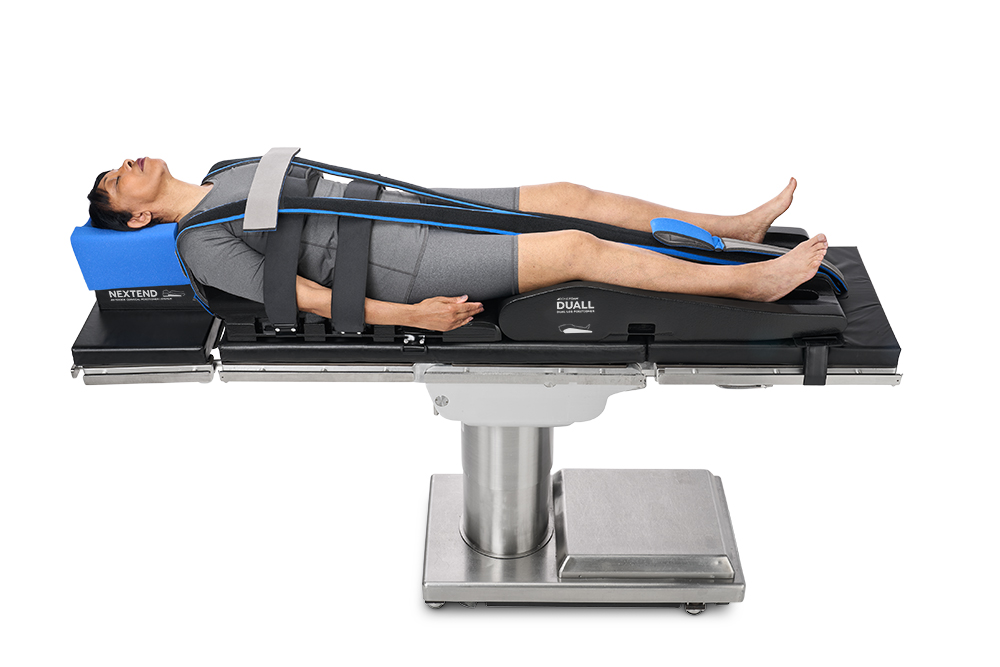
Driven by BoneFoam's innovative Nextend System, clinical teams are transforming patient positioning for spine surgery, particularly ACDF procedures.
Learn more about our FREE TRIAL of the Nextend System.
Why patient positioning matters
The ultimate goal of spine surgery is to have the patient up, mobile and without pain as quickly as possible. Unfortunately, when patients are not positioned in a standardized, consistent way, it can affect surgical outcomes.
"Patient positioning is really important," said Choll Kim, MD, a minimally invasive spine surgeon at Excel Spine in San Diego. "And it starts with consistency."
In particular, the new wave of navigation and robotics in spine surgery relies on the consistency of anatomical landmarks throughout the procedure, from the incision to the end of the case.
"This has elevated the importance around patient positioning across spine surgery, including anterior cervical spine procedures,"said Peter Cole, executive vice president of BoneFoam. “Even with a highly skilled surgical team and advanced navigation, variability in operative landmarks over the course of a procedure can introduce unnecessary complexity into the surgical environment. Consistency in patient positioning plays a foundational role in enabling procedural precision, visualization, and reproducibility.”
Some spine surgeries also take a long time. If a patient is not in a good position for the entirety of a long case, it can lead to injuries, especially to a patient's skin.
Archaic patient positioning for cervical spine surgery
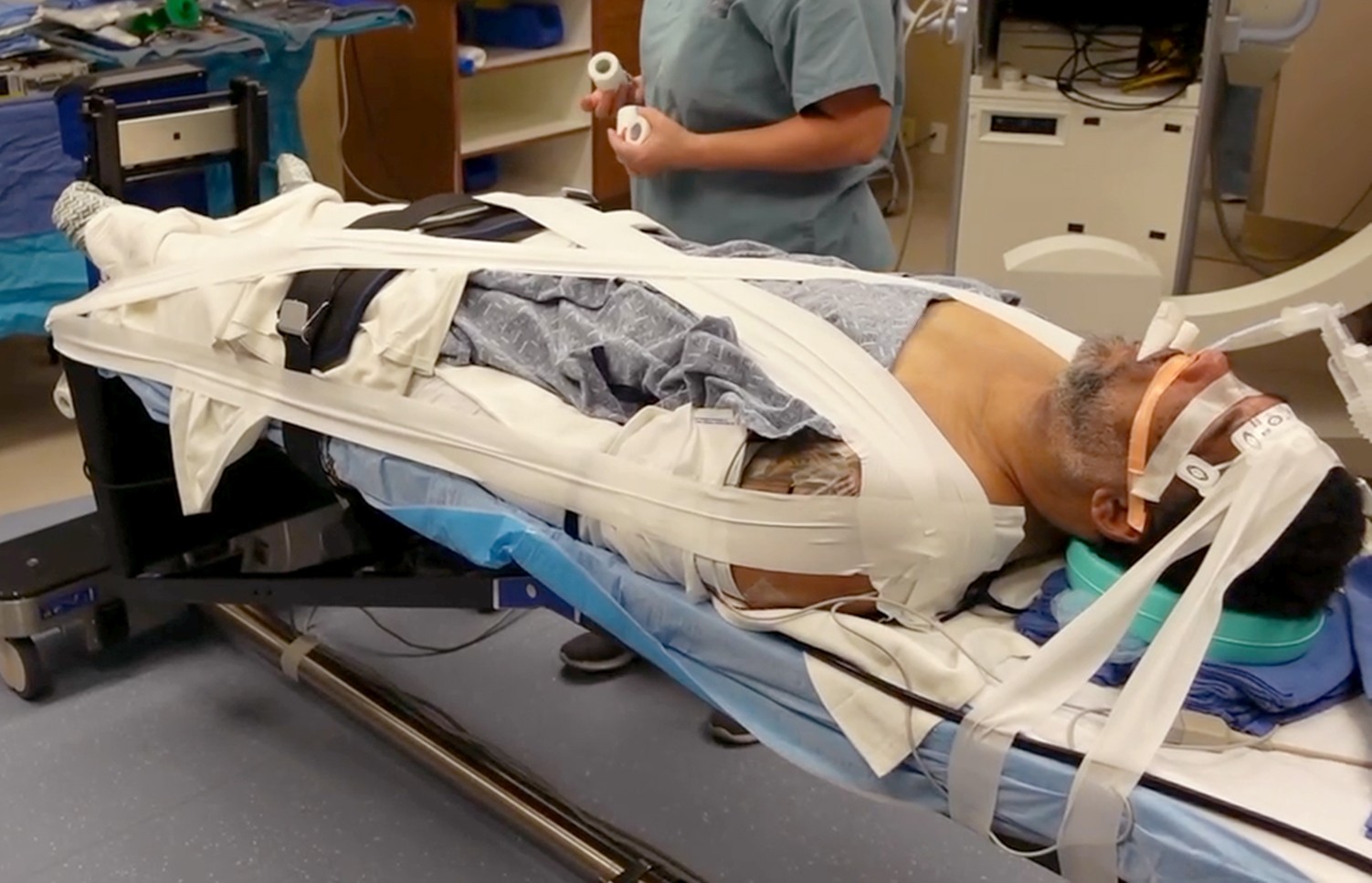
Despite the importance of patient positioning during spine surgeries, standardization is almost non-existent. "Patients are still positioned like we're in the Stone Ages," Dr. Kim observed. "Each of us positions patients the way we learned in our fellowship, utilizing rolled up towels, one-liter IV bags or pillowcases. There's a consistency problem in patient positioning, which hasn't changed in 25 years."
These makeshift positioning methods are not consistent — especially for patients of different sizes and body types — and frequently make it necessary to adjust and manipulate a patient, which can add risk.
Positioning patients in this antiquated way is not efficient, as surgeons and team members might spend 30-45 minutes prior to a procedure dealing with patient positioning, in an environment where operating room time is limited and often valued at $60 to $120 per minute.
Also problematic is the frequent use of tape in the OR. A patient's shoulders may be taped to the base of the table and there is no readjustment of the tape over the course of the entire case. The patient is essentially locked in, meaning the surgeon doesn't have good visualization of C6 and C7 because the shoulders are in the way. The makeshift positioning methods and use of excessive tape can lead to a prolonged and challenging procedure.
Learn more about our free trial of the Nextend System.
The BoneFoam Nextend Anterior Cervical Positioning System
Building on its success in having developed widely adopted patient-positioning solutions for the ortho trauma space, BoneFoam developed the Nextend Anterior Cervical Positioning System for cervical surgeries in collaboration with leading spine surgeons.
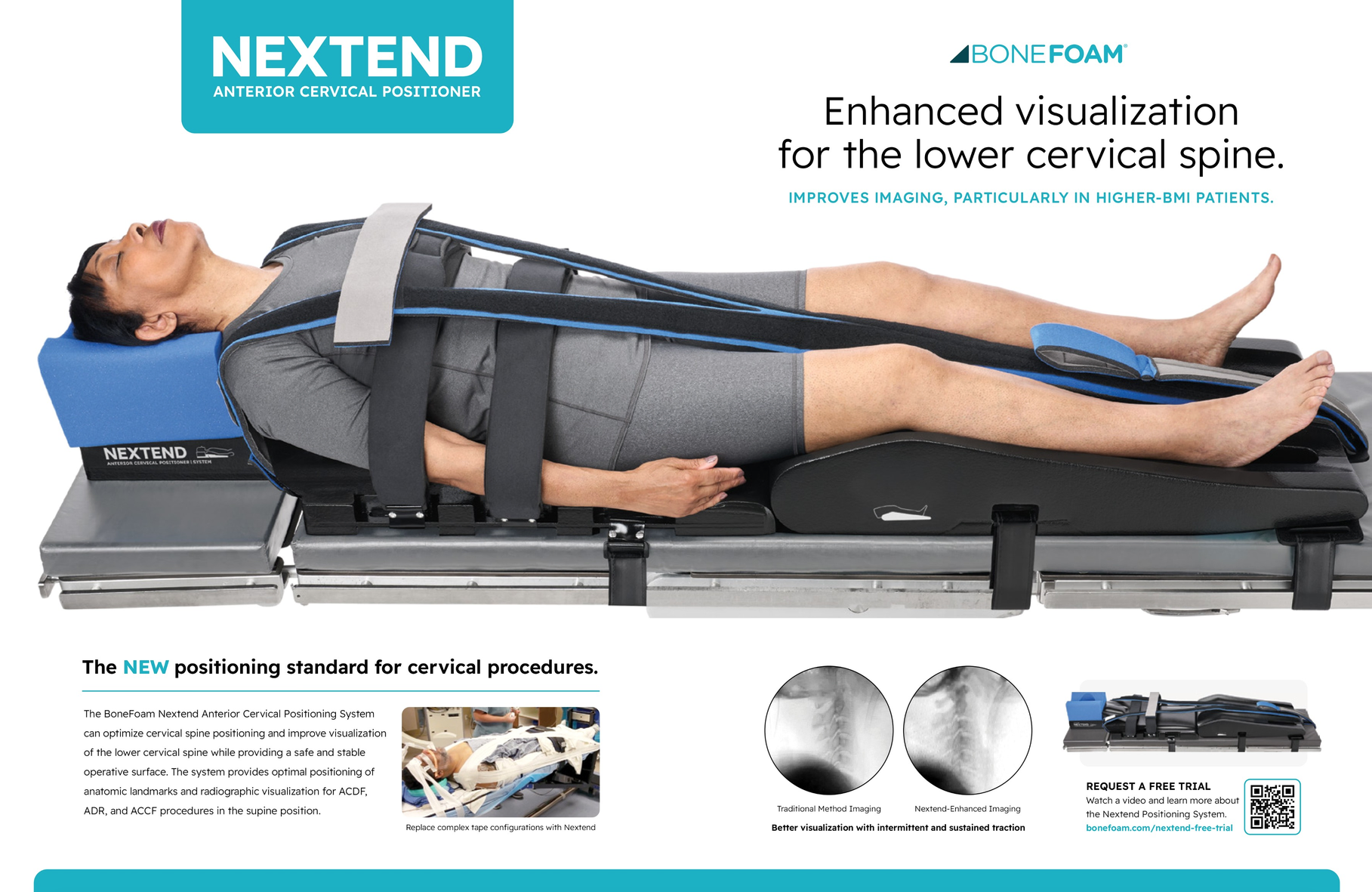
Nextend modernizes patient positioning for cervical surgeries by eliminating outdated positioning methods and complex tape configurations that have limited the ability to achieve proper visualization of the lower cervical spine and have increased the risk of injury.
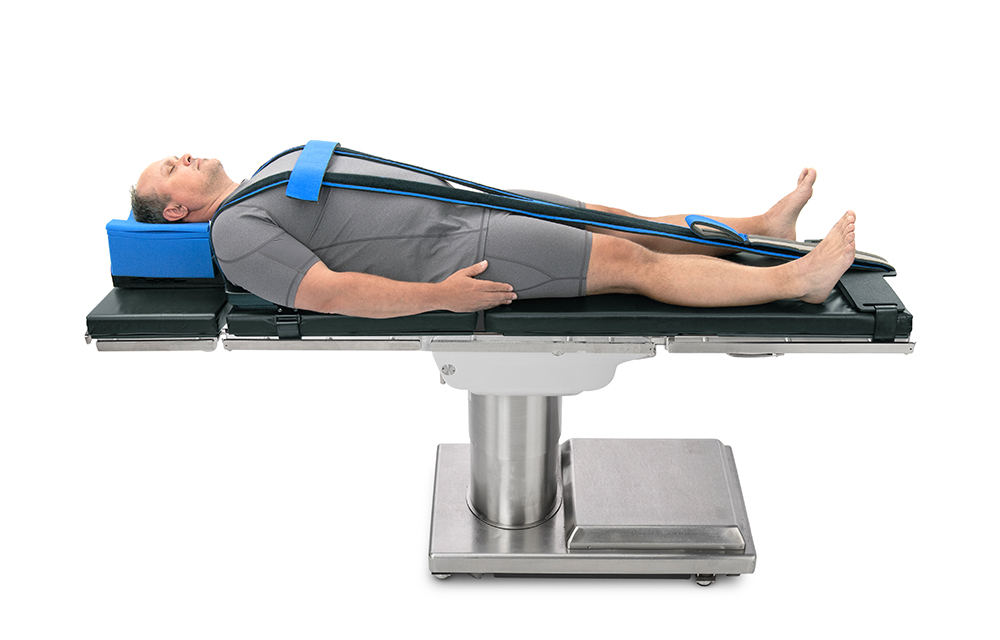
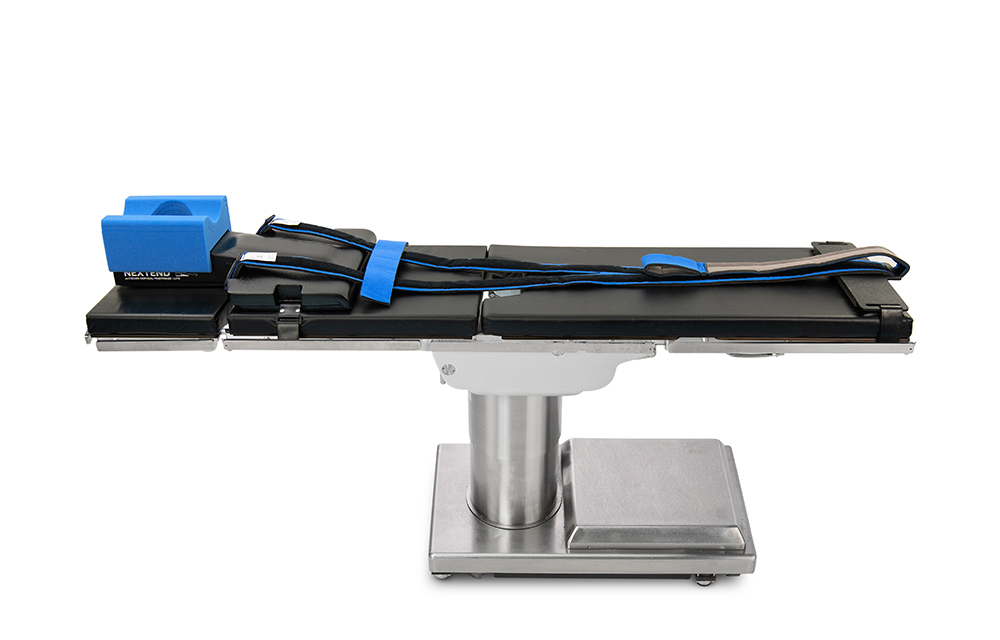
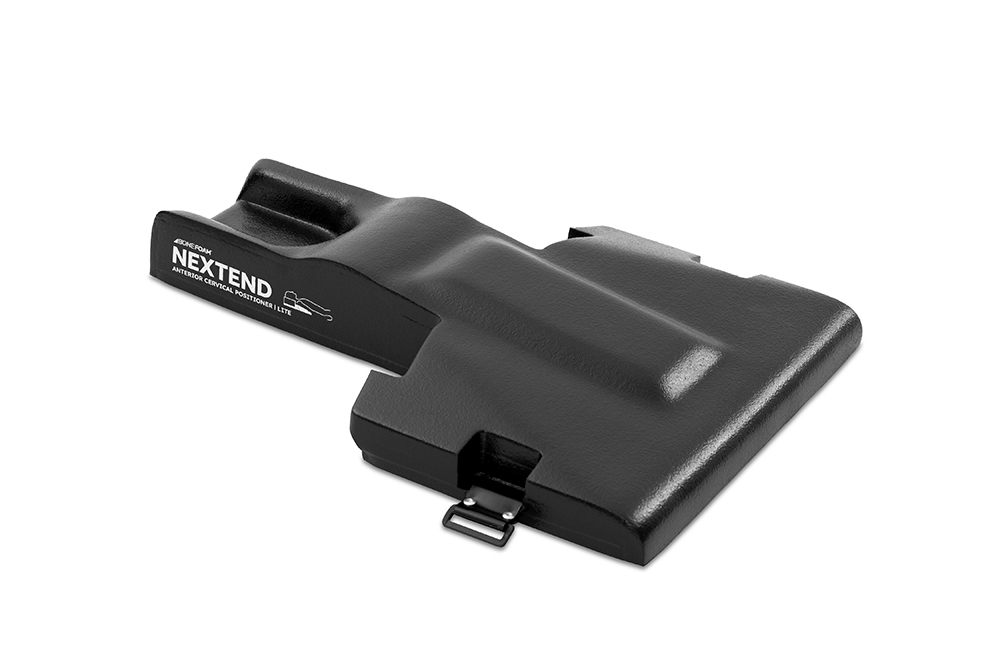
With Nextend patients are intubated directly on an ergonomic positioner, where cervical extension is easily adjusted through the unique head support that can be modified for different patient profiles. Dr. Kim noted this headrest has eliminated his need to use head traction. The patient's arms can be tucked, using comfortable, high-quality foam straps that protect the ulnar nerve while maintaining open access to lines and leads, providing consistent and reproducible arm positioning.
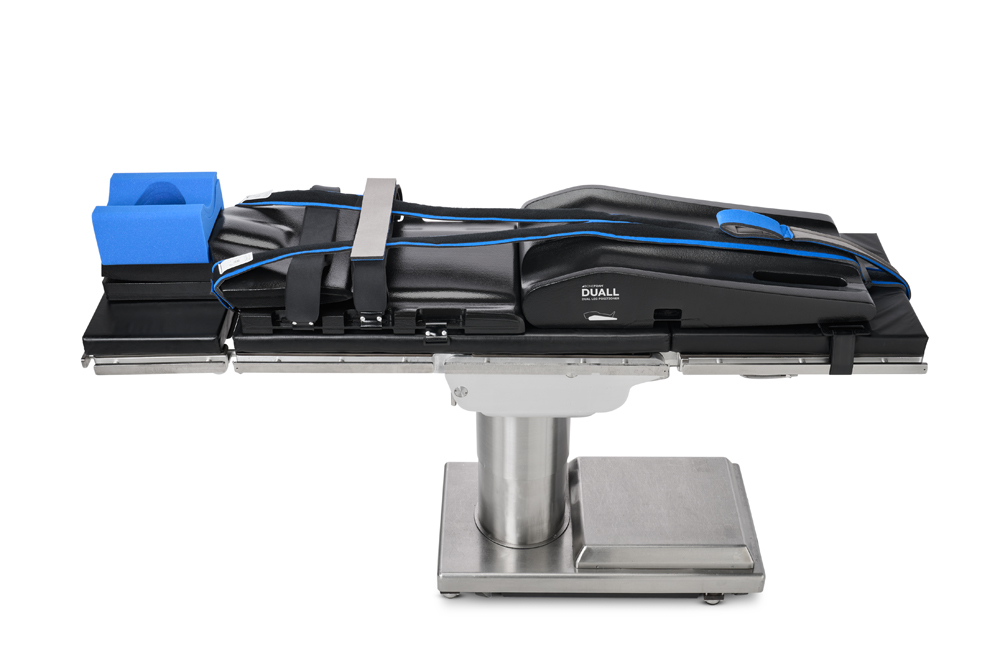
The dynamic BoneFoam Y strap is laid over the patient and secured to the base component to provide symmetric depression of the shoulder girdle. This allows the surgeon and staff to apply intermittent and sustained symmetric traction to achieve better visualization of anatomical landmarks.
"With tape, the patient is almost always in a constant or permanent traction position, which for a long procedure can be problematic," explained Clint McCullough, director of clinical sales, BoneFoam. "With Nextend, it allows a surgeon or staff to use traction intermittently. It's all based on the surgeon and staff preference. Nextend provides surgeons with options and flexibility." Nextend allows traction to be applied only when needed for imaging, rather than maintaining fixed shoulder taping throughout the case. It may help reduce prolonged shoulder distraction and positioning-related stress on the brachial plexus, a mechanism described in anterior cervical spine surgery, while potentially minimizing postoperative shoulder or interscapular discomfort reported after ACDF.
By improving shoulder depression and cervical alignment, Nextend can enhance visualization of the lower cervical spine, which is particularly important for patients with higher BMI, while reducing positioning-related risks for patients.
This standardized positioning process for ACDFs provides greater consistency, better visualization and improved patient safety. "Nextend is a lot easier to use, a lot more consistent and when you have those things together, it makes a huge difference," Dr. Kim said.
Improved efficiency for ASCs
As more ACDF procedures are migrating to ASCs, both surgeons and ASC administrators are focused on efficiency and throughout, driven by a general mindset of "every minute matters." Previously, positioning for ACDF procedures was slow and inconsistent, taking valuable OR time to position each unique patient. The Nextend system — particularly BoneFoam's Nextend Lite — was designed with ASCs in mind, with greater standardization, consistency and efficiency. Nextend Lite provides all of the patient positioning benefits of the Nextend system — including the positioner, headrest and Y straps — but is leaner, easier to store and less expensive. "It allows ASCs that might have less resources the same ability to position patients efficiently and to eliminate the other time-consuming methods that they may have used in the past," Mr. McCullough said.
Adopting new patient positioning methods
Today, many surgeons and teams performing ACDF procedures are continuing to position patients the same way they have done for years. "It's not that people are doing things wrong," observed Mr.McCullough. "But we know there is a better way."
Dr. Kim stressed that any significant change in the processes and techniques used for patient positioning needs to be surgeon-driven, because otherwise, team members will be resistant to change."Surgeons need to recognize that there is a new way to do something better," Dr. Kim said.
After education and experience, with repetition, Dr. Kim anticipates that surgeons and teams will become much more consistent and efficient.
"There's a better way for patients, a better way for hospitals and ASCs and a better way for surgeons," Mr.McCullough noted. Typically, once surgeons learn about the Nextend System and get initial experience with this new patient-positioning method, they immediately see the benefits and don't want to go back to their previous ways of positioning.
As the field of spine surgery continues to see incredible innovations and advances, in areas such as AI, robotics and materials technologies, a relatively simple innovation can make a tremendous difference, improving the consistency, safety and efficiency of patient positioning.
Just as BoneFoam tools have become the industry standard in ortho trauma, Mr. Cole envisions a similar trajectory in spinal surgery.
"There will soon be a day when every spine surgery is not reliant on MacGyver methods," Mr. Cole said. “The transition away from improvised positioning toward standardized, system-based approaches is already in motion and will soon become an expected standard of the modern spine procedure.”
Learn more about our free trial of the Nextend System.