What You Do Between Therapy Sessions May Determine Your Knee Surgery Outcome
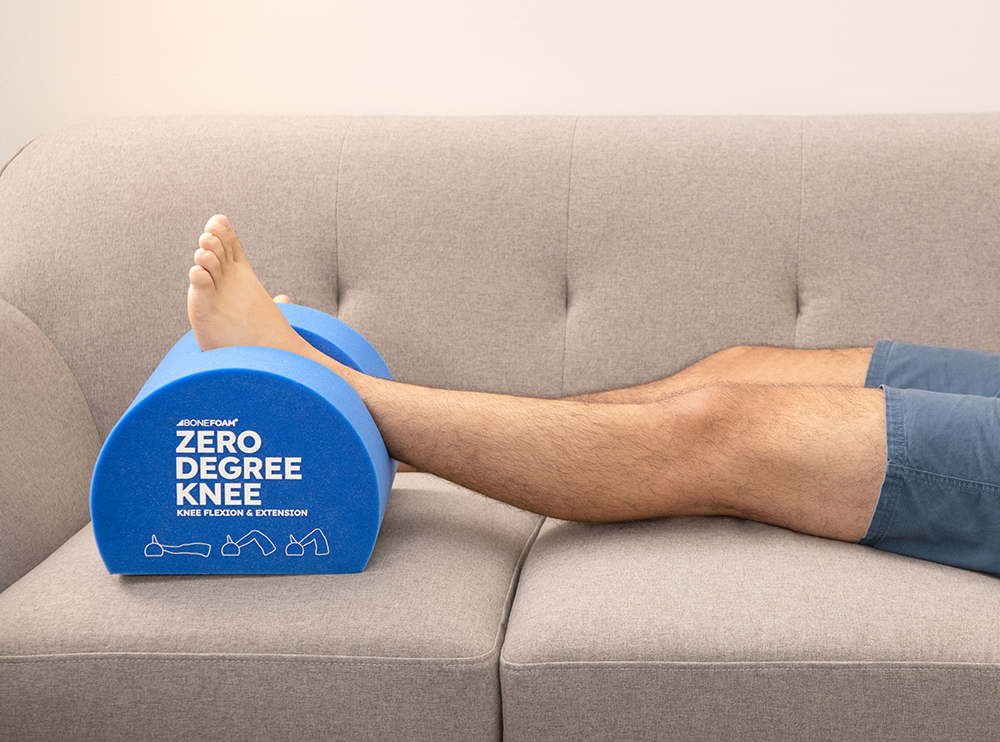
When preparing for knee surgery, whether a total knee replacement, a ligament reconstruction, or another related procedure, most of the conversation understandably centers on the care you receive within the hospital, clinic, or surgical center. However, one of the most critical drivers of recovery often receives far less attention than it deserves -- healing and recovery. What you do at home between therapy sessions, especially how you position your knee while not in activity during resting and sleeping, is fundamental in the healing process. Positioning of your lower extremity is exactly the problem BoneFoam's Zero Degree Knee (ZDK) is designed to address.
A Common Issue Most Patients Do Not Know About
One of the most important goals after knee surgery is regaining full knee straightening, what clinicians call terminal knee extension (TKE). It sounds simple, but it can be surprisingly difficult to achieve and maintain. After surgery, pain and swelling naturally make it more comfortable to keep the knee slightly bent, a position many patients subconsciously adopt during the early stages of recovery. As a result, patients often rest, sleep, and sit with the knee in that position without realizing it. Over time, the surrounding tissues adapt to that flexed posture, making it increasingly difficult to fully straighten the knee. This is not a rare complication. The reported incidence of knee stiffness following ACL reconstruction ranges from 2 percent to 35 percent. ¹ One study of 229 patients found that 25.3 percent experienced significant extension loss just four weeks after surgery. ²
When extension loss becomes severe and fails to improve with physical therapy, additional surgical intervention may be required, bringing its own recovery time, risks, and costs along with it. ³ Preventing the problem through proactive care is far preferable to treating it later, when the damage has often already been done.
The Hours That Matter Most
Here is something worth considering: physical therapy sessions typically last one or two hours and occur only a few times each week in ideal cases. That leaves more than 20 hours each day when patients are managing recovery on their own, without a PT to guide them along the way. Physical therapists do their best to equip patients with the knowledge, guidance, and tools needed to achieve the best possible outcomes. However, recovery ultimately depends on what patients do outside of their therapy sessions for optimal results.
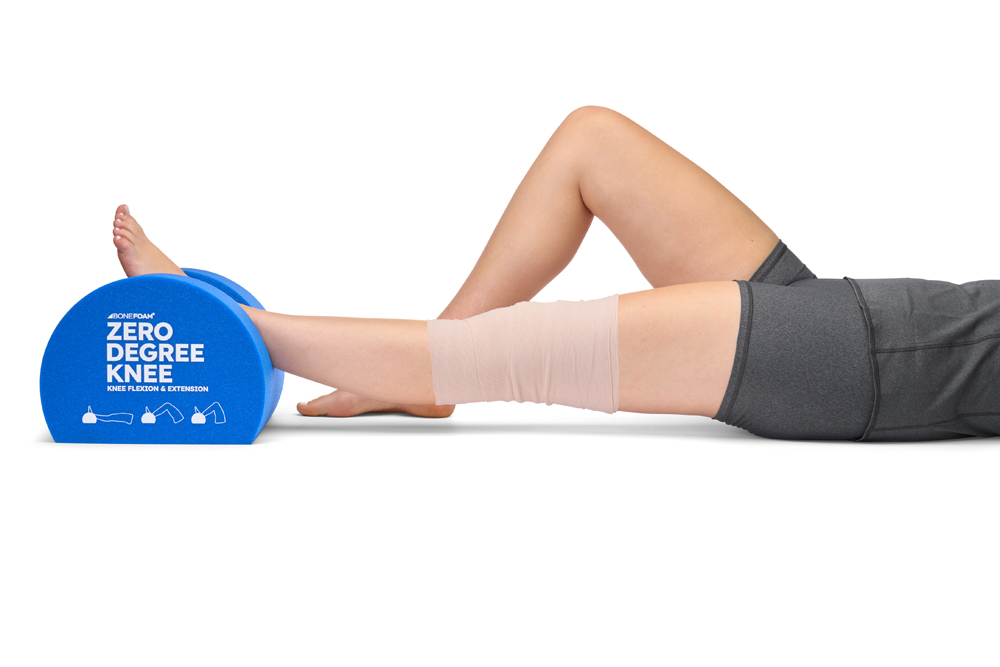
During the hours between activity or therapy, knee positioning matters tremendously. Clinical guidance is clear: the knee should rest in full extension with the heel supported, not the knee itself supported. Yet maintaining knee extension with the heel supported consistently at home is often difficult without the proper tools and support to reinforce optimal positioning.
Rolled towels shift. Pillows flatten or can easily slide out of place. Knock-off products lack quality. Most improvised setups become uncomfortable or ineffective over time, often causing patients to abandon them altogether. Everyday compliance is so important in the healing process. Without consistent support, the knee gradually returns to a bent position, and the tissues adapt accordingly.
What Sets Apart the BoneFoam Zero Degree Knee
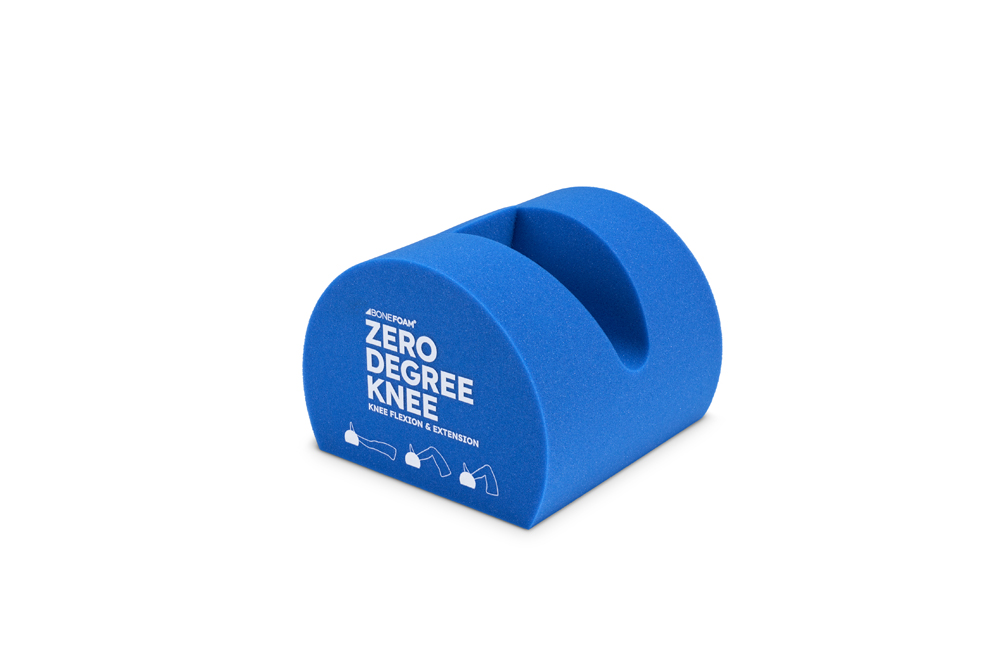
The BoneFoam Zero Degree Knee was designed by clinicians to eliminate the guesswork from home positioning. Rather than elevating the knee, which can actually work against extension, the ZDK supports the heel and lower leg, allowing gravity to gently and passively encourage full knee straightening. The device also maintains the foot and ankle in a neutral position, helping prevent external hip rotation, a subtle but important feature that promotes proper alignment throughout the entire lower extremity system.
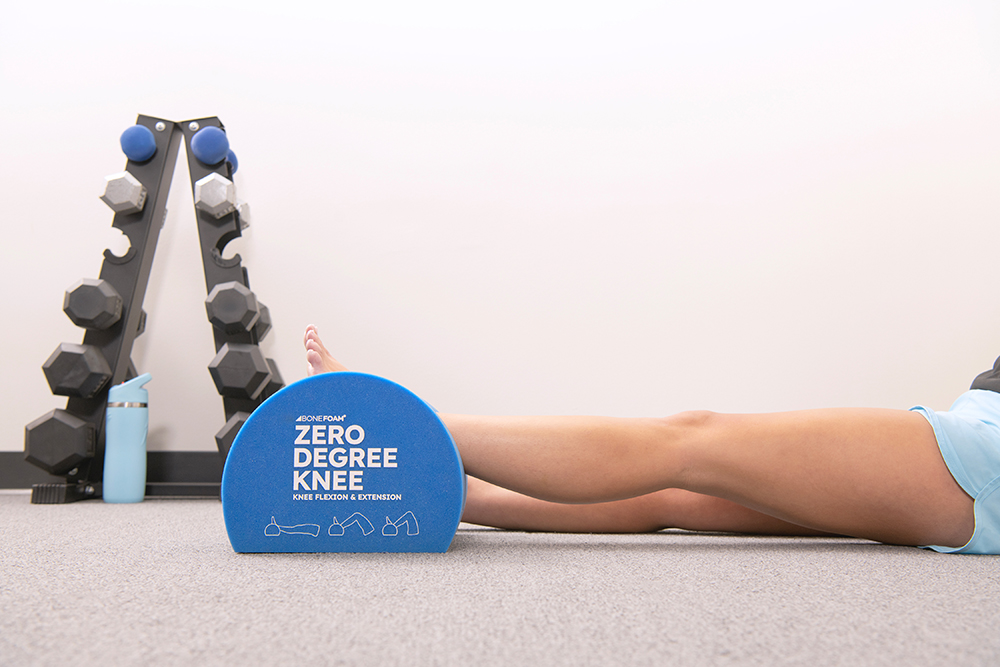
The ZDK also features an easy-glide surface that allows patients to perform simple sliding exercises at home, helping improve both knee bending and straightening between formal therapy sessions. As a result, it serves not only as a positioning tool, but also as an active component of the rehab process.
This tool was designed for simple and repeatable self-setup, so patients can position correctly every time without requiring direct assistance or a clinic visit.
Recovery at Home Is Shifting
More rehabilitation is shifting toward the home setting, with telehealth consults and follow-ups increasingly supplementing or replacing in-person appointments. ⁴ That shift places greater responsibility on patients and highlights the importance of effective recovery tools outside the office. A clinical trial currently underway at Prisma Health is evaluating the impact of the ZDK on early knee extension outcomes following total knee replacement, comparing patients using the ZDK with those following standard recovery protocols. ⁴ The study reflects growing the recognition that home positioning is an important factor influencing postoperative outcomes.
Why This Matters
It can be tempting to focus solely on getting a surgery in isolation, but a surgery without active and passive recovery methods is a useless tool. What happens during each of the stages of recovery can influence how you move for years to come. The goal is not simply to recover from surgery, but to recover in a way that supports healthy movement for the long term. Learn more or buy now.
Simple By Design
To learn more about the BoneFoam Zero Degree Knee and BoneFoam's full line of recovery positioning solutions, visit BoneFoam.com.
References
- Ekhtiari S, Horner NS, de Sa D, et al. Arthrofibrosis After ACL Reconstruction: A Systematic Review of the Literature. medRxiv. 2020.
- Mauro CS, Irrgang JJ, Williams BA, Harner CD. Loss of extension following anterior cruciate ligament reconstruction: analysis of incidence and predictors. Arthroscopy. 2008;24(2):146–153.
- Blackman AJ, Nwachukwu BU, et al. Management of postoperative knee stiffness: current concepts and outcomes. Arthroscopy Sports Medicine and Rehabilitation. 2024.
- ClinicalTrials.gov. NCT05678231. Evaluation of the Zero Degree Knee Positioning Device Following Total Knee Arthroplasty. Prisma Health Midlands. 2023.