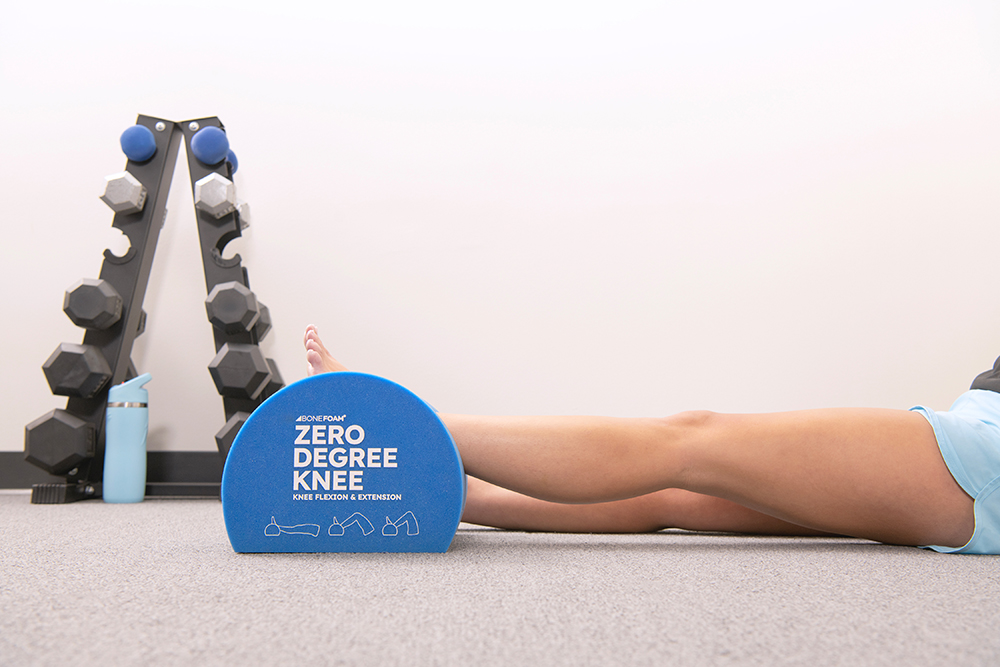
Terminal Knee Extension After Surgery. Why It Matters and How the BoneFoam Zero Degree Knee Helps.
Achieving full knee straightening—known as Terminal Knee Extension (TKE)—is one of the most critical factors in a successful recovery after knee surgery. However, for many patients, it is also the most difficult outcome to achieve and maintain. Pain, swelling, stiffness, and natural guarding often cause patients to rest with the knee slightly bent during sleep, while sitting, or between exercises. Over time, this subtle flexed position can hurt the rehabilitation progress, contribute to scar tissue formation, and make regaining full extension challenging.
This is where the BoneFoam Zero Degree Knee (ZDK) plays a pivotal role in recovery. Designed specifically by physicians to support the knee in a true extension position, the Zero Degree Knee helps patients consistently achieve and maintain TKE during rest and recovery. By removing the guesswork and discomfort associated with towels, pillows, or improvised at-home props, the ZDK allows patients to reinforce proper knee positioning safely, comfortably, and repeatedly.
To understand why the Zero Degree Knee is so impactful, it’s important first to understand what Terminal Knee Extension is and why it matters so much after knee surgery.

What is Terminal Knee Extension (TKE)?
TKE is the full straightening of the knee.
Why is Terminal Knee Extension Important After Knee Surgery?
TKE is crucial for achieving normal walking patterns, balanced standing, mechanics for long-term integrity of the joint, and proper muscle activation.
What Can a Patient Expect in the Rehabilitation Process to Achieve TKE?
During pre-surgery rehabilitation and post-surgery recovery, therapists emphasize the importance of flexion (bending of the knee) and extension (straightening of the knee). Each of these movements are crucial to function and they are a core piece to returning to daily activities and recreational interests. Yet, reaching ideal knee flexion and full knee extension can be very challenging to achieve!
Therapy sessions will focus on strengthening of the quadriceps (the large muscle group in the front of the thigh) as well as activating the quadriceps at the right time during lower body movements. Achieving TKE is dependent on the hamstring muscle groups working properly. Exercises focus on form and strengthening when the knee is in a slightly bent position moving towards a full straightening position.
The exercises can cause discomfort, and it is common for patients to feel hesitant as they push hard towards maximal extension. Achieving Terminal Knee Extension may be impacted by pain, swelling, poster for joint capsule tightness, scar tissue formation, and apprehension. While physical therapy sessions can provide significant support to achieve optimal post-surgery outcomes, success in the recovery journey is highly dependent on home management… rest, activity, posture and positioning, home exercises, pain management, and safety.
Home exercise programs are hard to keep up with, and as individuals gain more mobility and independence post-surgery, patience for the details dwindles, and the crucial details of recovery are easily overlooked. While it brings much joy and satisfaction to start back to daily routines, the long-term impact of neglecting key outcomes such as TKE may cause much greater negative outcomes for long-term goals.
What happens when achieving TKE is a problem?
Post-surgery therapy emphasizes proper alignment of the hip, knee, and ankle while avoiding prolonged flexion at the knee. TKE is especially challenging in the early recovery phase as holding the knee fully straight, especially for prolonged periods of time, can be painful, and rather frustrating to achieve. Patients find greater comfort with the knee bent during sleep and daily rest. The knee is in slight to moderate flexion because it feels more tolerable, while at the same time compromising gains towards full knee extension. Scar tissue can also develop with the knee in the flexed position, causing greater risk for significant problems in the rehab process.
What Tools are Available to Improve TKE for Early and Long-Term Outcomes?
Full knee flexion and extension is emphasized during knee surgery recovery, positioning during rest time and sleeping is crucial for maintaining gains with therapy and home exercise programs. Recommendations at home for optimal TKE typically include tools such as towel rolls, pillows, or other positioning props. These tools are often uncomfortable, inconsistent, and difficult to sustain for achieving TKE. Additionally, without precise placement and proper use, negative or unintended outcomes are very possible.
BoneFoam’s Zero Degree Knee is a patient-friendly option, offering easy and repeatable patient set-up to achieve intended results for knee extension. Repeatability, ease and comfort allow the Zero Degree Knee to support longer periods of knee extension, particularly essential in the early weeks of recovery.
The Zero Degree Knee is designed for neutral foot alignment, allowing proper quadriceps activation during knee extension. It minimizes improper hip mechanics, which can contribute to compensation and/or pain in other areas of the body such as the ankle, back, and pelvis. The ZDK will optimize Terminal Knee Extension, a central factor in superior rehabilitation results. Optimal recovery is about consistency. Rehabilitation outcomes are dependent on patient follow through at home. The physician-designed Zero Degree Knee is an easy choice for patients to achieve positive results. It’s low-cost is high value for knee surgery recovery.
Learn more about the BoneFoam Zero Degree Knee. Buy now.